


Condensate Pumps for HVAC Drainage and Mini Split Systems
Condensate pumps are designed to collect and remove water produced by HVAC equipment, including air conditioners, heat pumps, furnaces, condensing boilers, dehumidifiers, ice machines, and ductless mini split systems. When gravity drainage is not available, a condensate pump helps move water safely to a drain, utility sink, or other approved discharge location.
A reliable condensate pump helps prevent overflow, water damage, short cycling, and messy condensate buildup around HVAC equipment. For homeowners, installers, and maintenance professionals, choosing the right pump depends on the system type, lift height, flow rate, noise level, installation space, and safety protection features.
Cleartide condensate pumps are built for quiet, efficient, and dependable condensate removal. From an ultra-quiet HVAC condensate removal pump for larger equipment to a compact mini split condensate pump for ductless AC systems, Cleartide offers practical solutions for both residential and light commercial HVAC drainage needs.
Types of Condensate Pumps
HVAC Condensate Removal Pumps
HVAC condensate removal pumps are commonly used with central air conditioners, heat pumps, furnaces, dehumidifiers, condensing boilers, and ice machines. These pumps usually include a collection tank that stores condensate before automatically pumping it away.
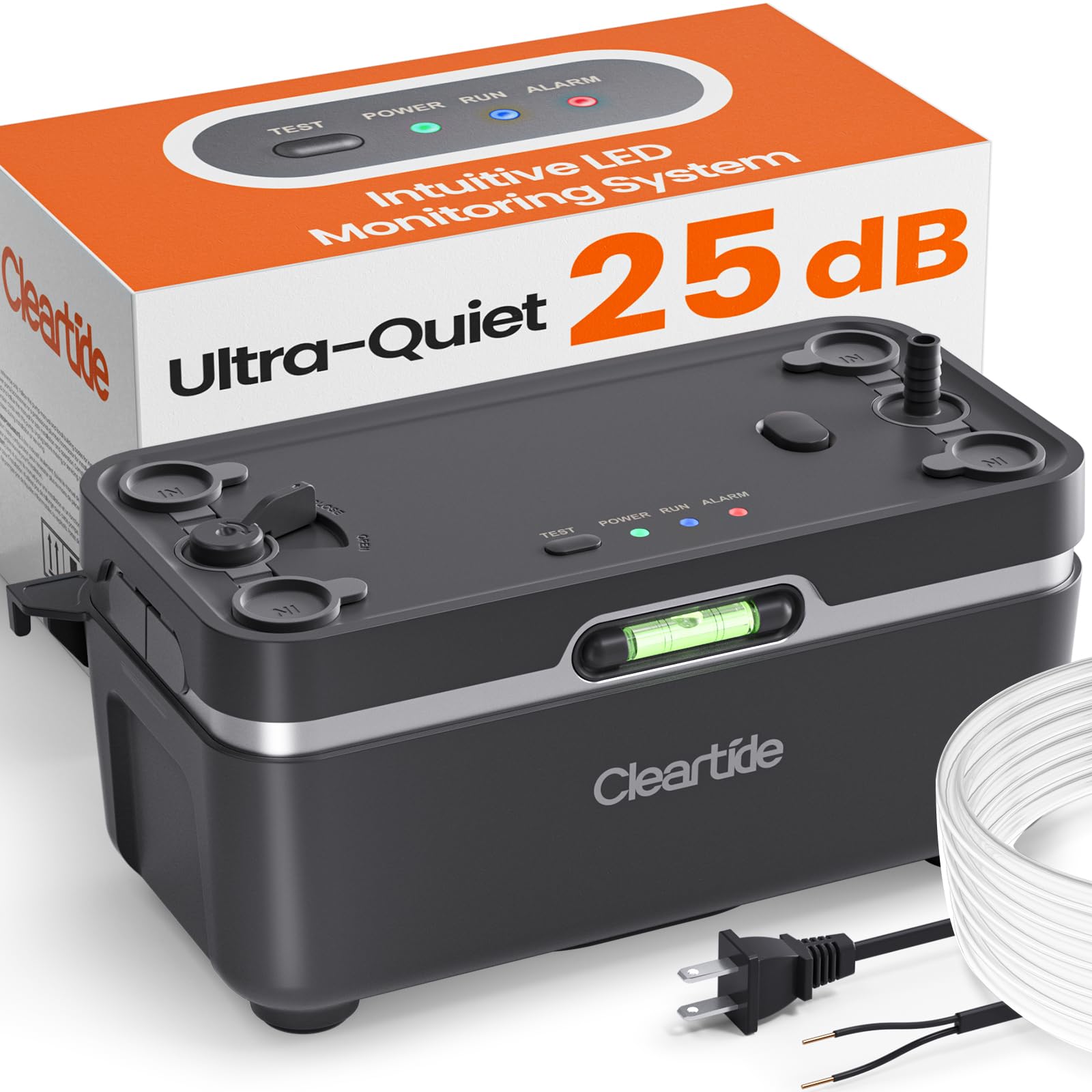
For standard HVAC drainage, choose the Ultra-Quiet Automatic HVAC Condensate Removal Pump. It features ultra-quiet 25 dB operation, up to 27.8 ft lift, up to 1,240 ml per cycle, and a 5/8-gallon tank for stable condensate removal. The high-sensitivity probe sensor, LED monitoring system, and one-touch test button make it a strong choice for everyday HVAC applications.
This type of condensate pump is ideal for:
● Central AC units
● Heat pumps
● Furnaces
● Condensing boilers
● Dehumidifiers
● Ice machines
Mini Split Condensate Pumps
Mini split condensate pumps are compact pumps designed for ductless air conditioning systems where space is limited and quiet operation is especially important. These pumps are often installed near wall-mounted indoor units, ceiling cassette systems, fan coils, or line set covers.
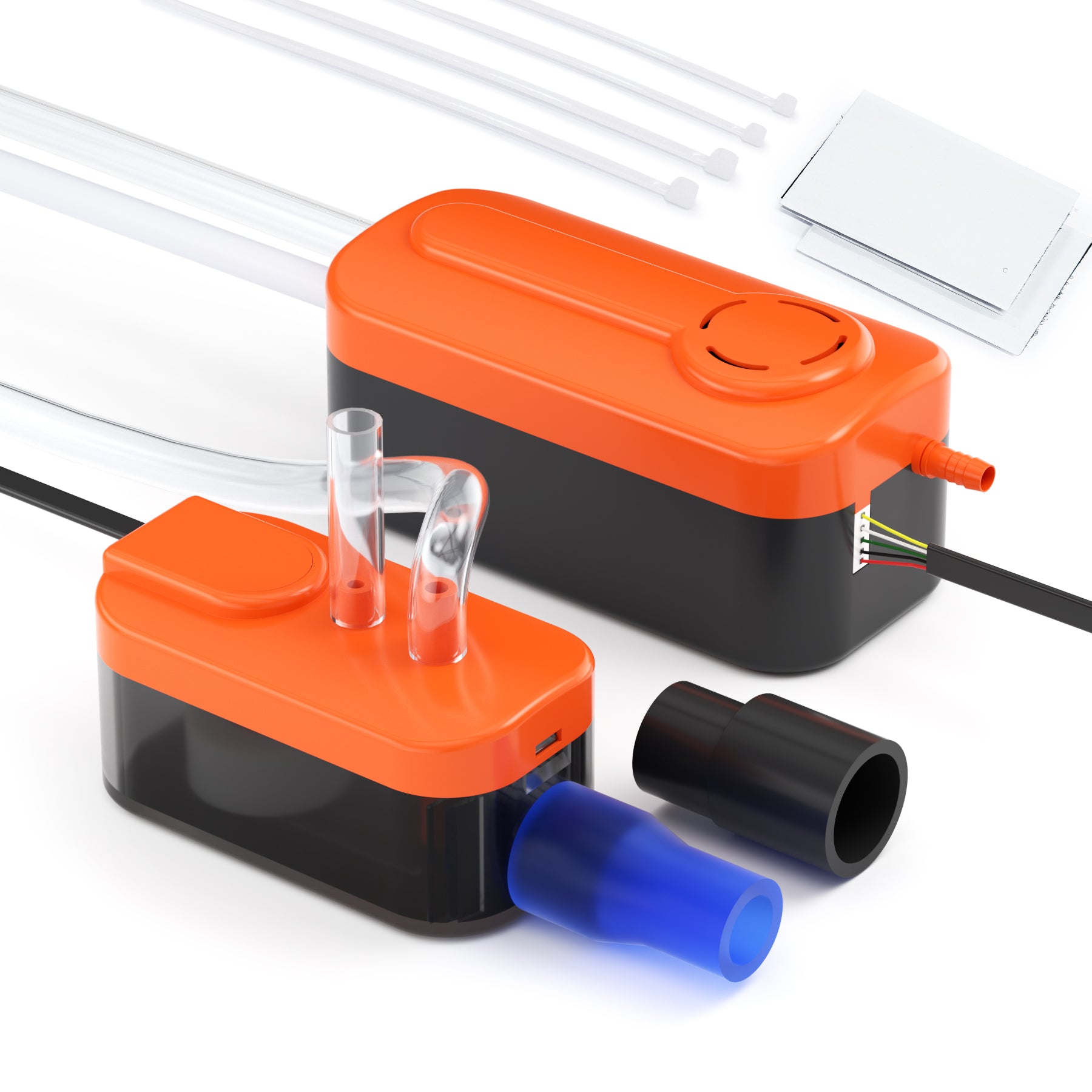
For ductless systems, choose the Ultra-Quiet Automatic Mini Split Condensate Pump for Ductless AC. It delivers up to 33 ft lift, up to 10.6 GPH flow rate, and quiet 23 dB operation, making it suitable for bedrooms, living rooms, offices, and other noise-sensitive spaces.
This type of condensate pump is ideal for:
● Ductless mini split AC systems
● Wall-mounted indoor units
● Fan coil units
● Ceiling cassette systems
● Compact HVAC installations
How to Choose the Right Condensate Pump
Lift Height
Lift height is one of the most important factors when choosing a condensate pump. It tells you how high the pump can move water vertically from the equipment to the drain point.
For larger HVAC systems, the Ultra-Quiet Automatic HVAC Condensate Removal Pump offers up to 27.8 ft lift. For ductless AC installations that may require longer vertical routing, the Mini Split Condensate Pump for Ductless AC offers up to 33 ft lift.
Flow Rate
Flow rate determines how much condensate the pump can remove over time. HVAC systems, dehumidifiers, and ice machines can produce different amounts of condensate depending on humidity, equipment size, and operating time.
For standard HVAC equipment, the Cleartide HVAC condensate pump removes up to 1,240 ml per cycle. For mini split systems, the Cleartide mini split condensate pump provides up to 10.6 GPH, making it suitable for continuous ductless AC drainage.
Noise Level
Noise level matters when the condensate pump is installed near living spaces, bedrooms, offices, or finished basements.
The Cleartide HVAC Condensate Removal Pump runs at just 25 dB, while the Cleartide Mini Split Condensate Pump runs at only 23 dB. Both are designed for quiet operation in residential and light commercial environments.
Tank Capacity and Residual Water
For tank-style condensate pumps, tank capacity affects how steadily the pump handles incoming condensate. A larger tank can help reduce frequent cycling and support stable operation.
The Cleartide HVAC condensate pump features a 5/8-gallon tank and leaves only 16 mm of residual water, helping improve drainage efficiency and reduce stagnant water inside the tank.
For compact ductless systems, the mini split condensate pump removes 19 ml per cycle with just 5 mm residual water, helping reduce short cycling and overflow risk in small reservoirs.
Safety Protection
A good condensate pump should include protection against overflow, clogs, and abnormal operation.
The Cleartide HVAC condensate pump uses a high-sensitivity probe sensor with no float switch, helping detect water levels accurately. It also includes LED indicators for power, operation, and fault status, plus a one-touch test button for quick system checks.
The Cleartide mini split condensate pump includes a high-sensitivity overflow switch that can connect to HVAC equipment and shut off the appliance when high water levels are detected, helping prevent overflow.
Common Applications of Condensate Pumps
1. Air Conditioner Condensate Drainage
Air conditioners remove moisture from indoor air, producing condensate that must be drained properly. When gravity drainage is not possible, a condensate pump moves the water to a suitable discharge point.
For central AC systems, the Ultra-Quiet Automatic HVAC Condensate Removal Pump is a reliable choice with quiet operation, strong lift height, and automatic water level detection.
2. Mini Split AC Condensate Drainage
Ductless mini split systems often require compact condensate removal solutions, especially when the indoor unit is installed far from a gravity drain.
The Ultra-Quiet Automatic Mini Split Condensate Pump for Ductless AC is designed specifically for mini split AC systems, with 23 dB quiet operation, 33 ft lift, and a compact split design for flexible installation.
3. Furnace and Condensing Boiler Drainage
High-efficiency furnaces and condensing boilers can produce acidic condensate during operation. A dependable condensate pump helps collect and move this water away from the equipment.
For these applications, choose a condensate pump with reliable automatic operation, sufficient lift height, and easy maintenance access.
4. Dehumidifier Drainage
Dehumidifiers can produce a steady amount of condensate in basements, crawl spaces, utility rooms, and humid environments. A condensate pump helps remove this water continuously without requiring manual bucket emptying.
The Cleartide HVAC Condensate Removal Pump is suitable for dehumidifier drainage where quiet operation and automatic condensate removal are needed.
5. Ice Machine Condensate Drainage
Ice machines require proper drainage to handle meltwater and condensate. A condensate pump can help move water to a drain when direct gravity drainage is not available.
For light commercial or residential ice machine applications, check lift height, tubing compatibility, and flow rate before selecting a condensate pump.
Frequently Asked Questions
Q1 What is a condensate pump?
A condensate pump is a small pump that collects and removes water produced by HVAC equipment, such as air conditioners, furnaces, boilers, dehumidifiers, ice machines, and mini split systems.
Q2 How does a condensate pump work?
A condensate pump collects water in a reservoir or tank. When the water reaches a certain level, the pump automatically turns on and moves the water through tubing to a drain or discharge location.
Q3 Do I need a condensate pump for my HVAC system?
You need a condensate pump when your HVAC equipment cannot drain condensate by gravity. This often happens in basements, utility rooms, finished spaces, or installations where the drain is higher than the equipment.
Q4 What size condensate pump do I need?
The right condensate pump depends on your equipment type, condensate volume, lift height, discharge distance, and available installation space. Larger HVAC systems may need a tank-style condensate pump, while ductless AC systems usually need a compact mini split condensate pump.
Q5 What is the difference between an HVAC condensate pump and a mini split condensate pump?
An HVAC condensate pump is typically used with central AC units, furnaces, boilers, dehumidifiers, and ice machines. A mini split condensate pump is smaller and designed for ductless AC systems, wall-mounted units, fan coils, and ceiling cassette systems.
Q6 How quiet should a condensate pump be?
For residential use, especially near bedrooms, living rooms, or offices, a quiet condensate pump is important. Cleartide condensate pumps operate as low as 23 dB to 25 dB, depending on the model.
Q7 Can a condensate pump prevent HVAC overflow?
Yes. A condensate pump with proper water-level detection and overflow protection can help prevent water from backing up or overflowing around HVAC equipment.
Q8 Can a condensate pump be used with a dehumidifier?
Yes. A condensate pump can be used with a dehumidifier when you want continuous drainage without manually emptying a water bucket.
Q9 Can a condensate pump be used with a furnace or boiler?
Yes. Condensate pumps are commonly used with high-efficiency furnaces and condensing boilers when gravity drainage is not available.
Q10 How high can a condensate pump lift water?
Lift height varies by model. Cleartide condensate pumps offer up to 27.8 ft lift for HVAC condensate removal and up to 33 ft lift for ductless mini split condensate drainage.
Q11 How often should I clean a condensate pump?
A condensate pump should be checked and cleaned regularly, especially in systems that run often. Cleaning the reservoir, filter, tubing, and check valve helps prevent clogs and keeps the pump working properly.
Q12 What features should I look for in a condensate pump?
Look for quiet operation, adequate lift height, reliable water-level sensing, overflow protection, easy maintenance, proper tubing compatibility, and a design that fits your HVAC system.